
PHA & AQHA Connection
Perfect Horse Auctions has a rich history that intertwines with key AQHA breeding lineages. Understanding AQHA history gives insight into the horses our organization serves. Read on to learn more about some of the historically significant American Quarter Horses who were apart of the American Quarter Horse Association (AQHA).

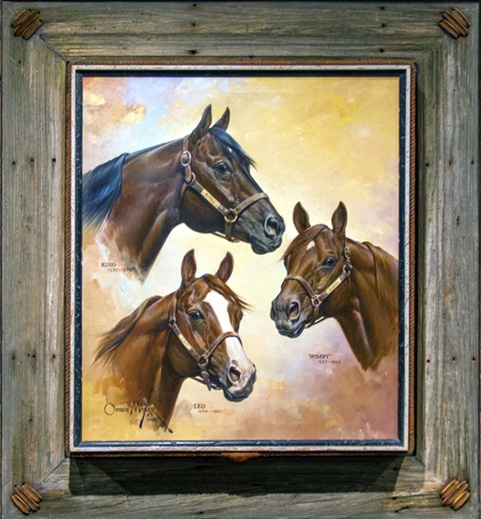
Wimpy was foaled on the King Ranch in Kingsville on March 3, 1937. Wimpy was a grand Champion Stallion in March 1941 at the Southwestern Exposition Quarter Horse show in Fort Worth, Texas which honor earned him the first number in the newly organized American Quarter Horse Association. Wimpy was inducted into the AQHA Hall of Fame in 1989. In September 1961 a bronze statue of Wimpy was erected outside the AQHA Headquarters in Amarillo, Texas.
The “legendary” AQHA King was a famous stallion, King P-234, foaled in 1932, who became known as the “cornerstone of the breed” for his superior conformation and ability to pass on his talent. He established a dynasty of influential Quarter Horses, including famous offspring like Poco Bueno and Royal King, who were also inducted into the AQHA Hall of Fame. His “King-bred” bloodline remains influential in modern Quarter Horses, with descendants earning millions in competition.
Mid To Late 1900's
Leo was born in 1940 on John Wesley House’s place near Cameron, Texas. Leo proved to be a prolific sire and is best remembered as a broodmare sire. Leo’s progeny displayed excellent conformation, athletic ability, quiet dispositions and cow sense – traits that helped them in the show ring as well as on the track. Famous Leo-bred cutting horses include Peppy San, Mr San Peppy and King’s Pistol. Sixty-nine of Leo’s get earned halter points, 46 earned performance points and 24 were AQHA Champions. In 1989, Leo was inducted into the American Quarter Horse Hall of Fame.
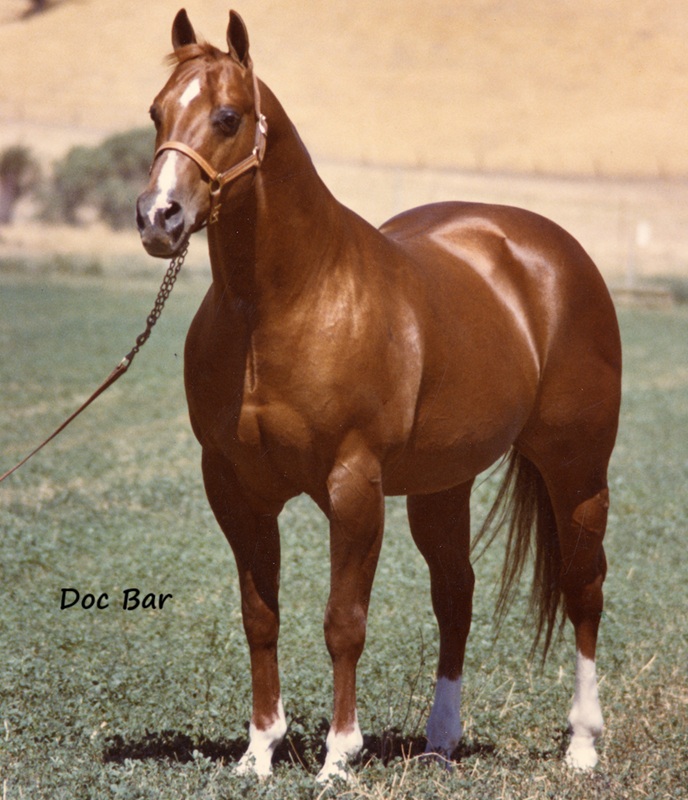
The legend of Doc Bar centers on the chestnut Quarter Horse stallion who became a legendary sire, revolutionizing the cutting horse industry despite being bred for speed and failing as a racehorse. Known for a consistent, athletic, and intelligent type, Doc Bar’s influence is found in top performers across many disciplines, and his bloodlines are highly prized in modern Western performance horses. He was inducted into the American Quarter Horse Hall of Fame in 1993, solidifying his iconic status.